







Transitional Spaces explores the in-between moments that shape experience—the pauses, crossings, and junctures where change unfolds quietly. It is about the spaces we move through rather than the places we arrive. These environments hold tension between presence and absence, belonging and detachment, motion and stillness.
Rather than documenting events, the work lingers in anticipation and aftermath. Light, reflection, and composition act as metaphors for uncertainty—how perception wavers and how meaning emerges within instability. The photographs suggest that transition is a state of being. To exist is to move, to wait, to hover between one condition and another. Transitional Spaces is about the poetry of impermanence—the fragile beauty of moments that slip away even as we notice them.
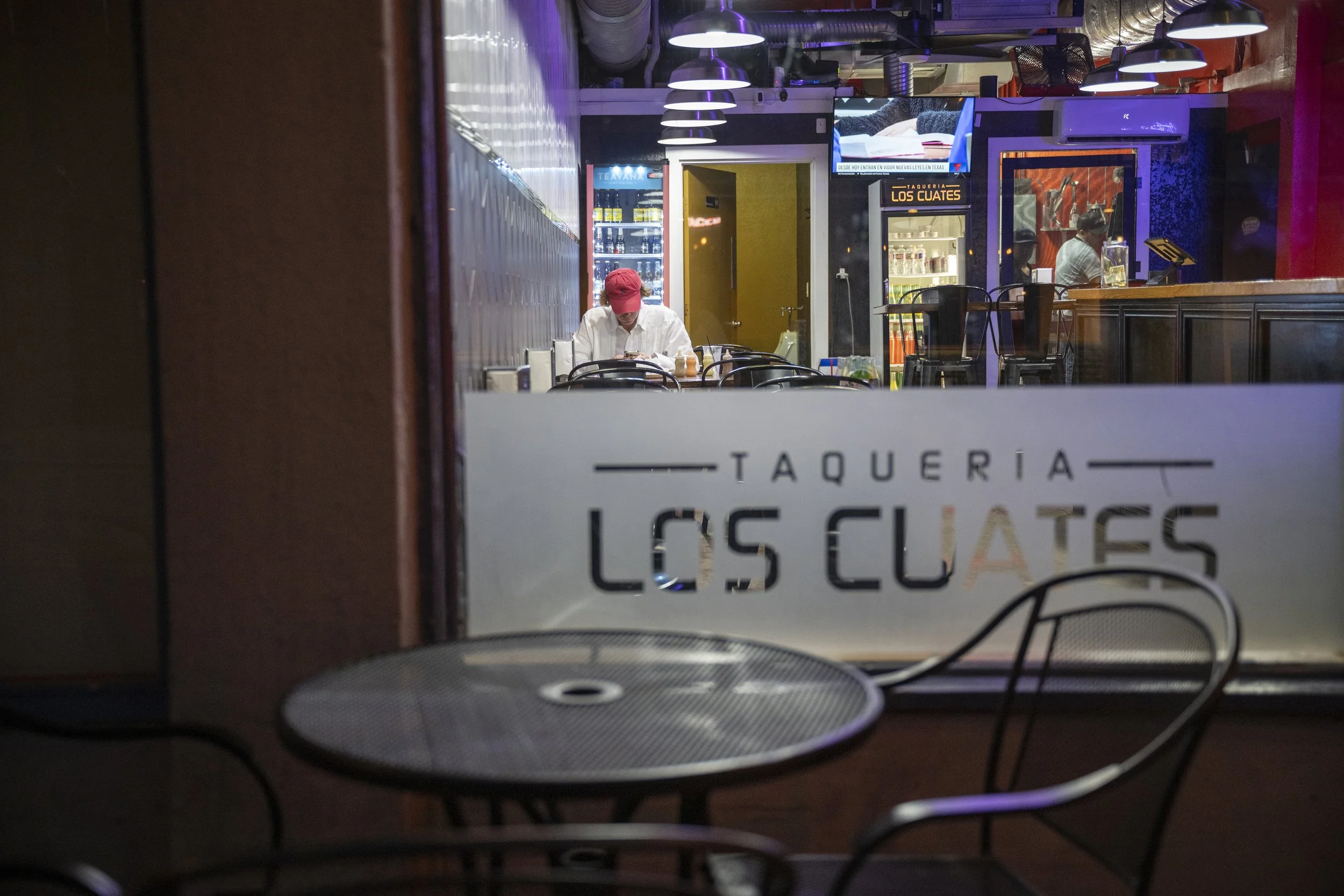
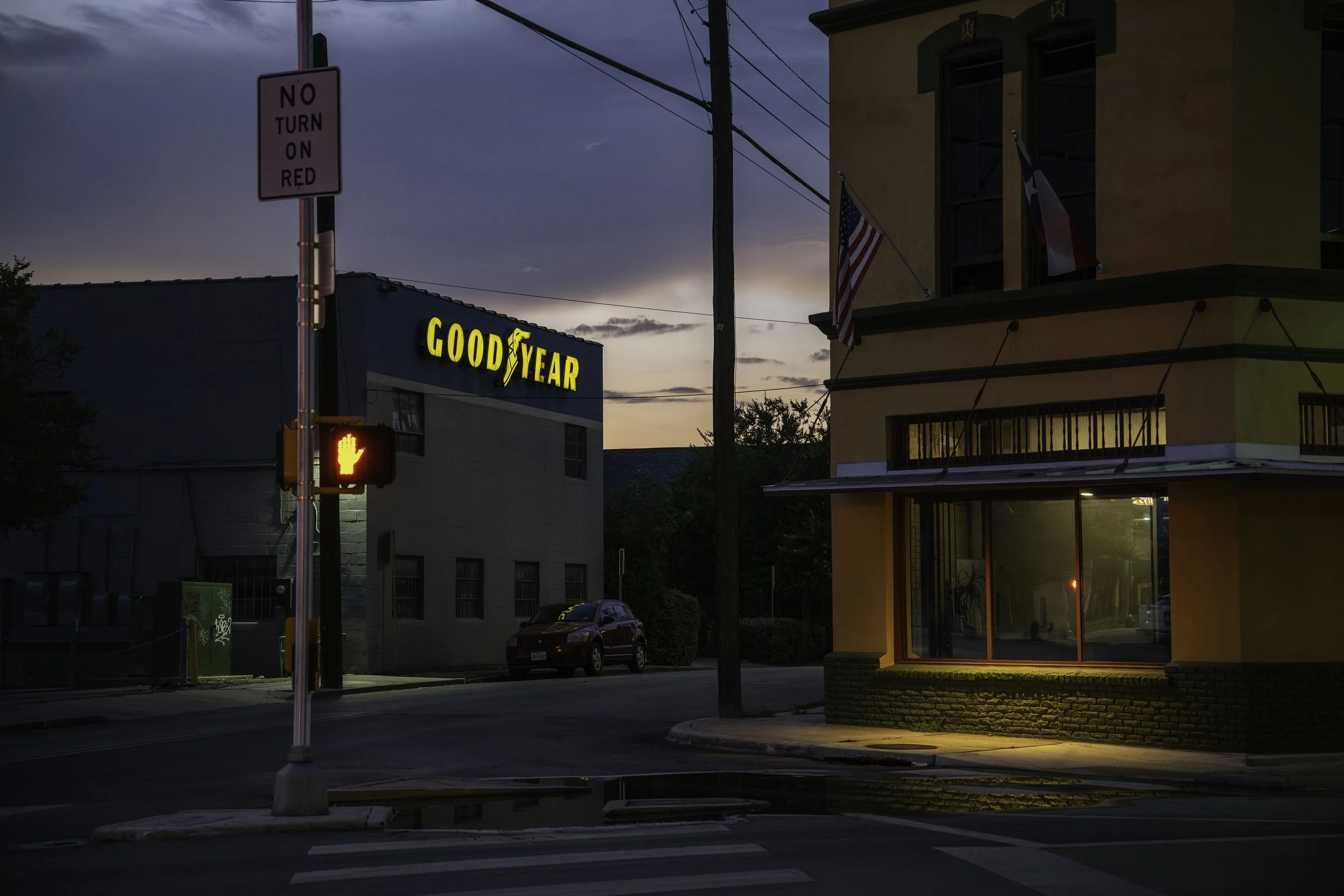
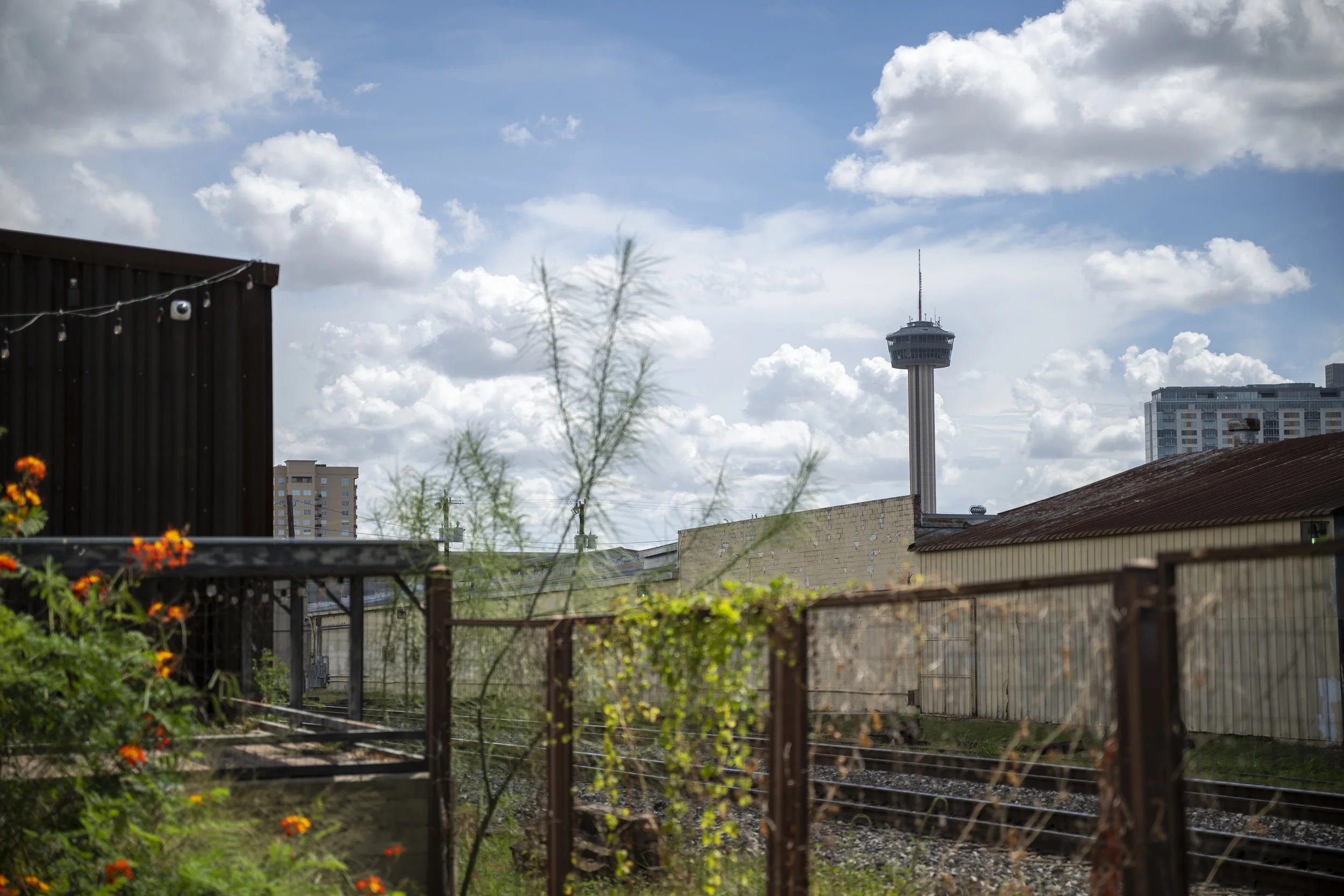
This triptych explores transitional spaces at three different scales — the personal, the public, and the structural. Each image reveals how thresholds shape human experience, holding tension between what is present and what is absent, between what moves and what waits, between what is built and what decays. Together, they form a narrative of the city as lived and felt in states of in-between.
Inside, the man sits alone, at the threshold of solitude and companionship—where the empty table outside echoes his silence and another type of company flickers in hand. The sequence opens with an intimate, human-scale moment. Solitude is framed not as isolation but as a threshold between presence and absence, companionship and disconnection.
At the intersections where directions meet and decisions are made. A brief pause before transition—where nothing happens. The focus shifts outward to the public street. The crossroads become a site of suspension, where anticipation holds more weight than action. This image locates the city as a stage of waiting and potential.
Framed by rusted fences, warehouses, and overgrown tracks—this scene foregrounds a city in tension—where growth and neglect coexist, and where beauty emerges from the collision of aspiration and abandonment. The triptych concludes with the city itself as the subject. Here the threshold is structural, where ambition and decay meet in uneasy balance. The skyline is less a horizon than a contested edge.
This chapter turns outward to the fragile intersections between people and the spaces they inhabit. Here, the city is no longer a backdrop but a force that shapes, confines, and overwhelms. Each image traces a different register of dislocation—moments when human presence feels precarious against the weight of the world around it.
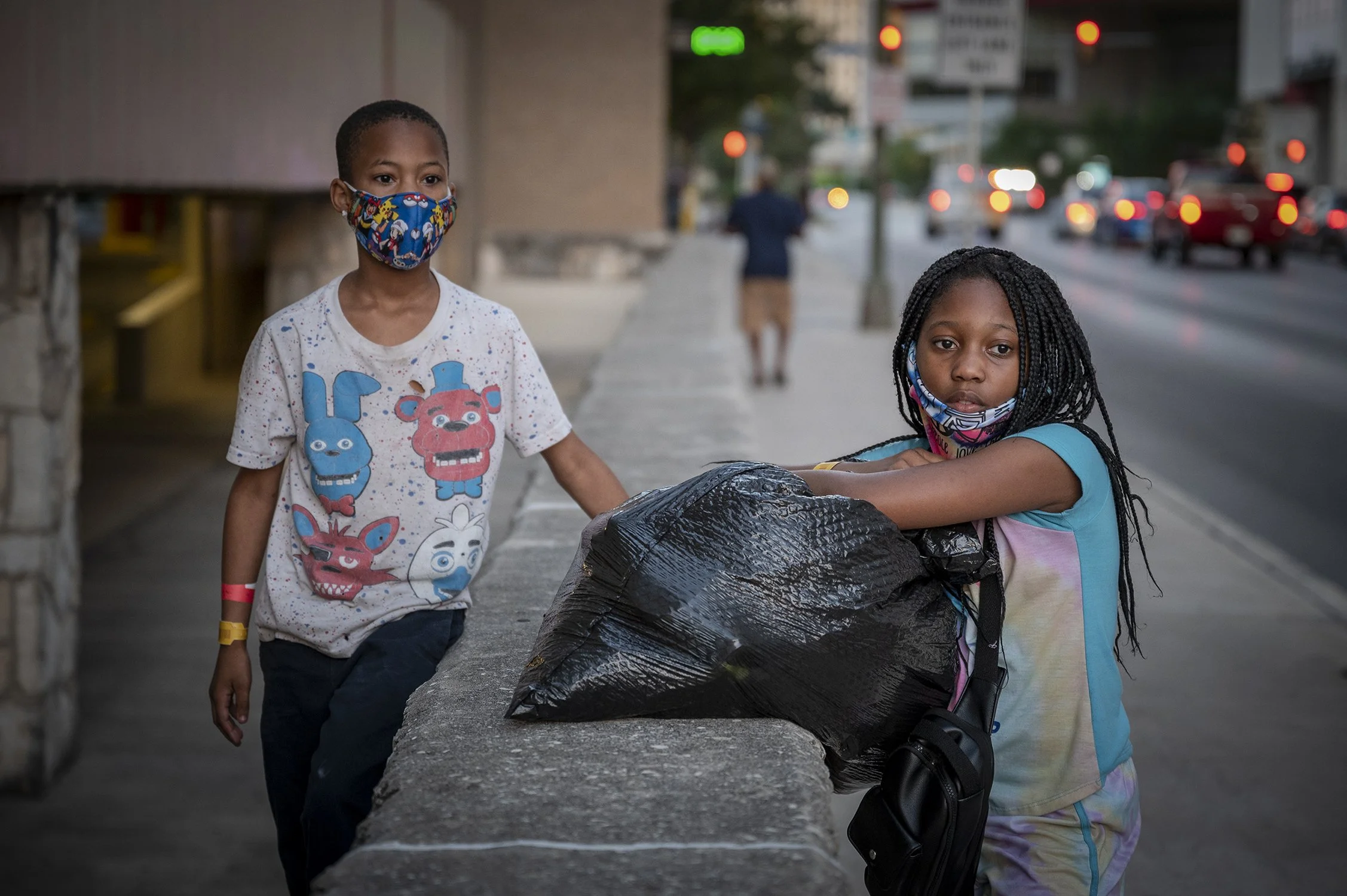
Two children rest against a low wall as traffic flickers in the distance. A mask slips down, a bag sits heavy, and the gaze of the girl fixes outward, quiet but unyielding. This opening image grounds the chapter in the tension of street life: the pause that is not stillness, the presence that is not settled. Here, the city hums behind them, indifferent, while their bodies hold a fragile claim to space.
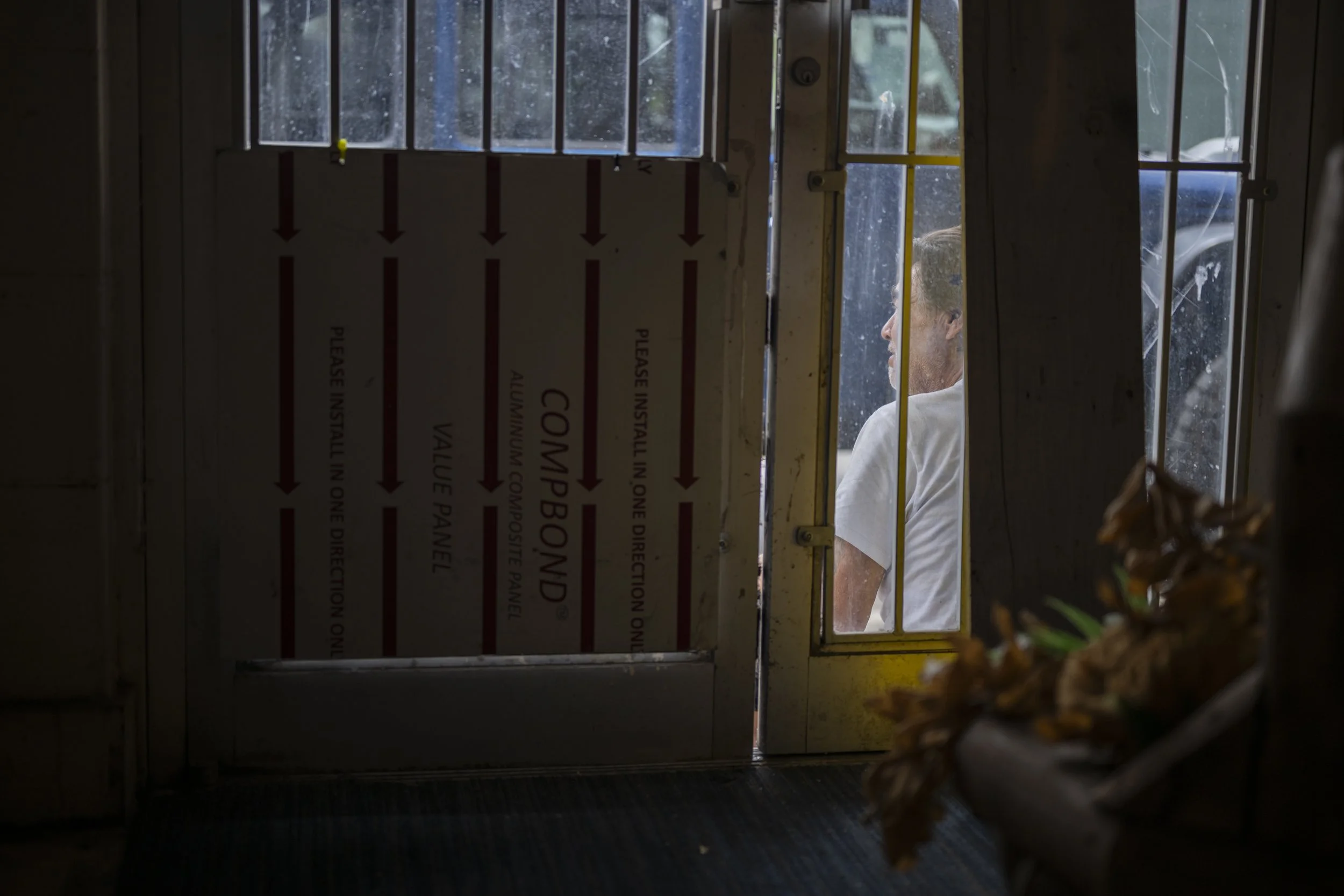
The man, caught mid‑turn, seems unaware. Ironically, he’s both tantalizingly close and psychologically distant, separated by barriers. The construction panel hints at transition or repair, while the wilted bouquet suggests someone past their prime. Intimate yet isolating, we’re invited to observe, not listen. However, a narrow sliver of light pushes against the man's enclosure, offering a glimpse of hope.
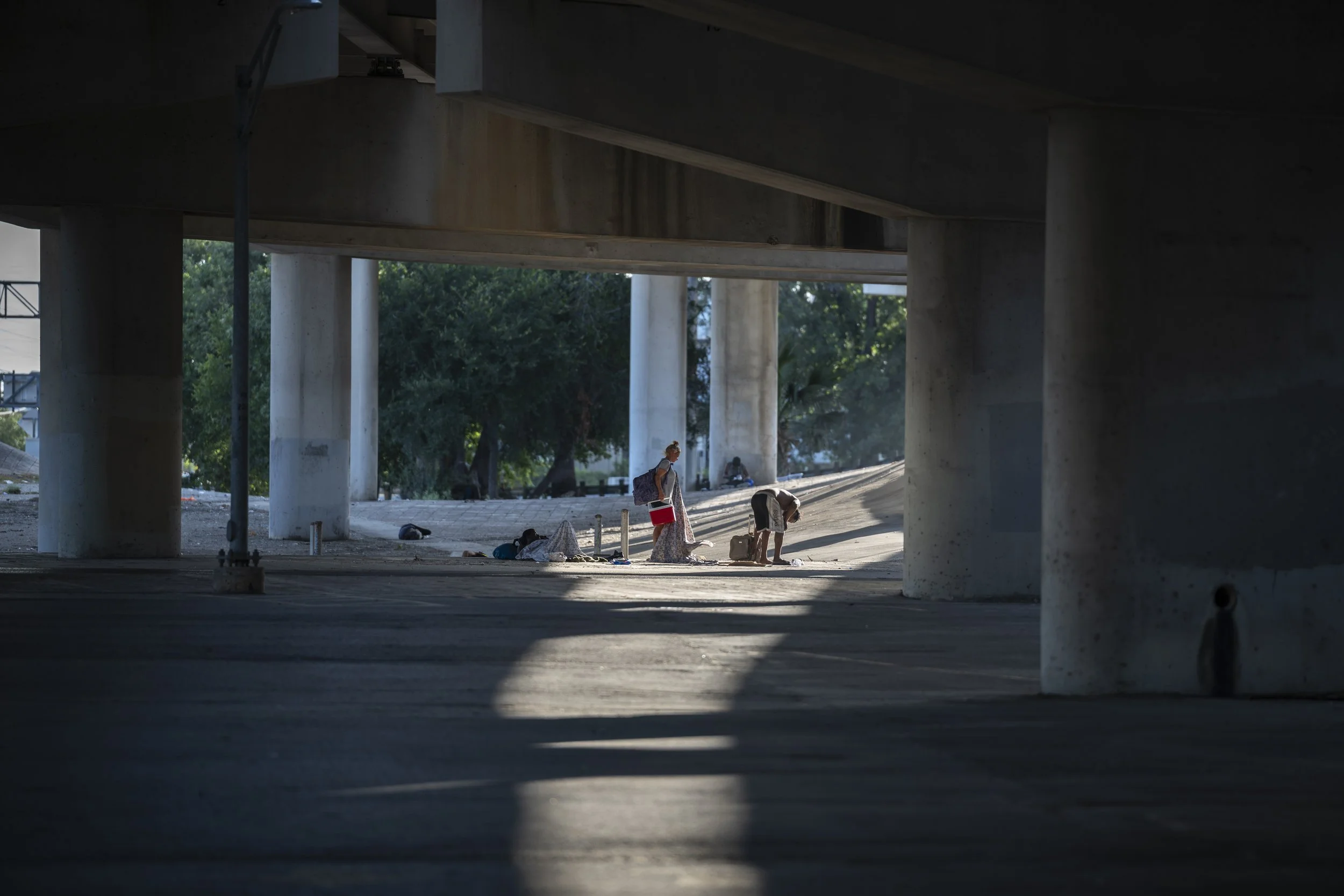
Beneath massive concrete spans, small figures move in the light that cuts through the dark. The scale of the structure dwarfs them. Survival unfolds in spaces of abandonment, where shelter is carved from neglect. Here, the environment no longer simply presses against presence—it swallows it.
This chapter traces the thresholds of perception—the ways the world resists holding its form. Each image reveals a point where vision falters, where clarity slips, and where the stable world gives way to instability. Together, they form a meditation on what happens when seeing itself begins to erode.
As perception erodes, the directive meant to guide loses authority. Language remains visible, yet slips away, as meaning hovers between looking and understanding.
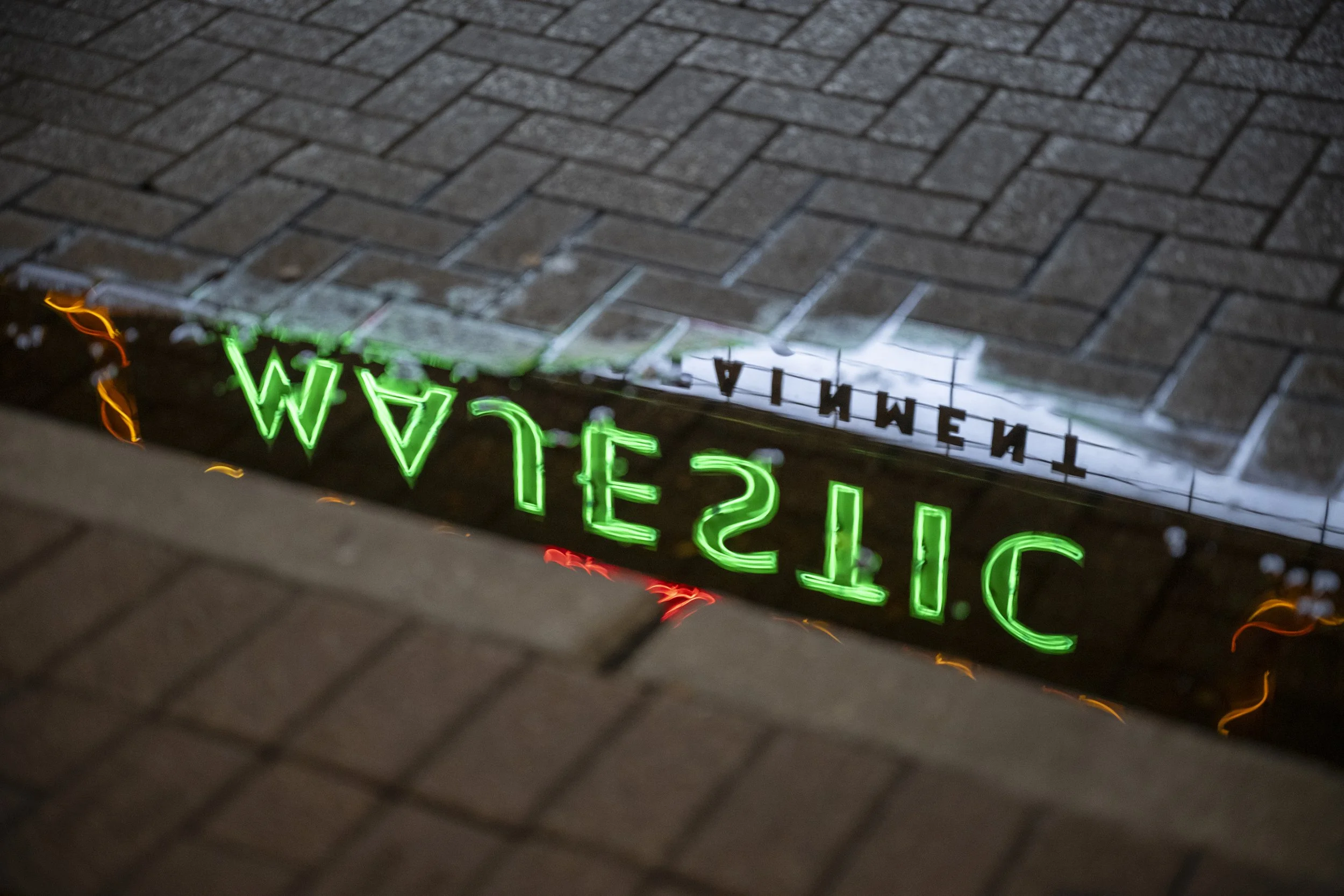
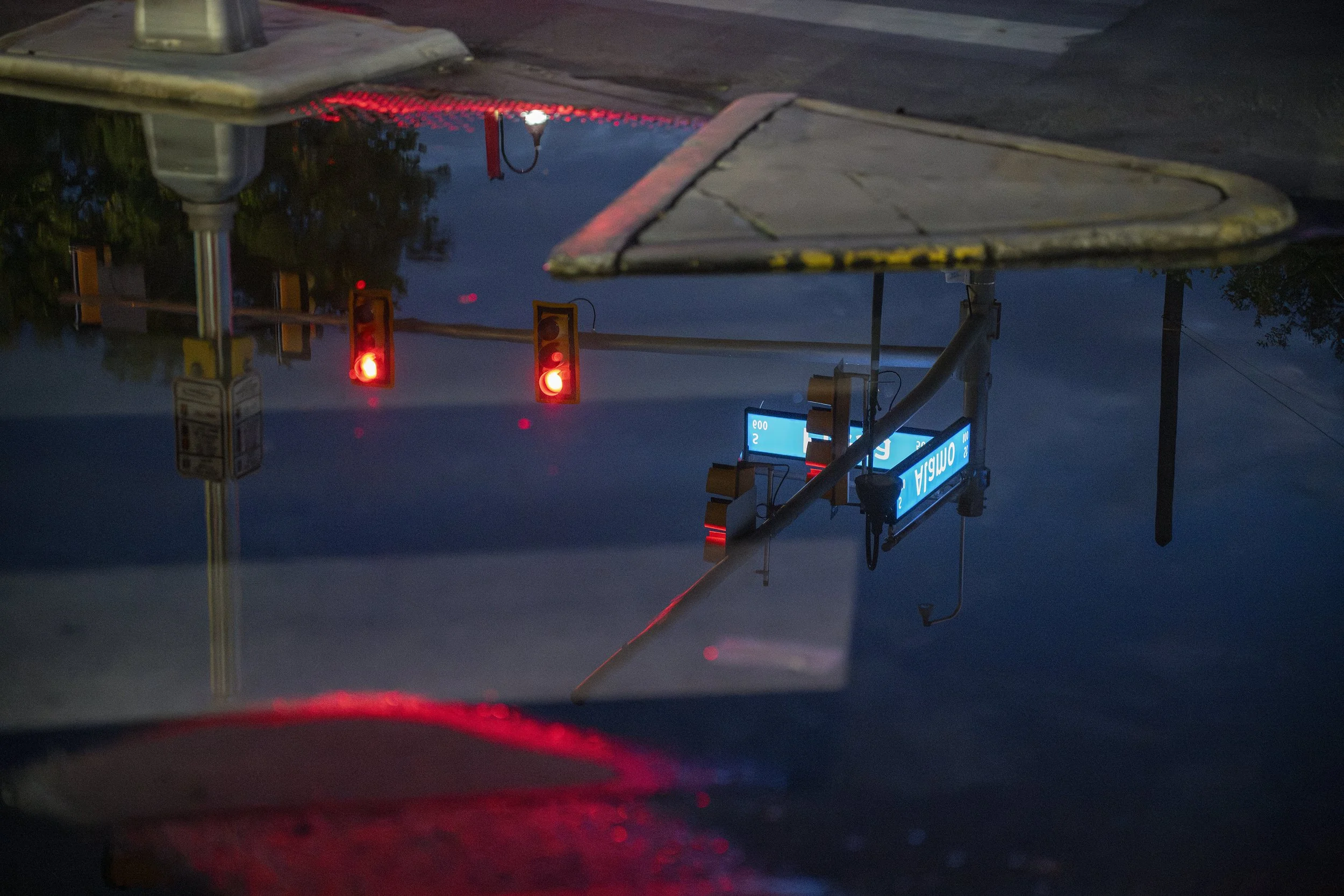
A world turns upside down in a moment of uncertainty. The scene fractures at the edge of visibility, where reflection doubles and distorts. The world hovers between surface and depth, stable in form, but fragile in perception.
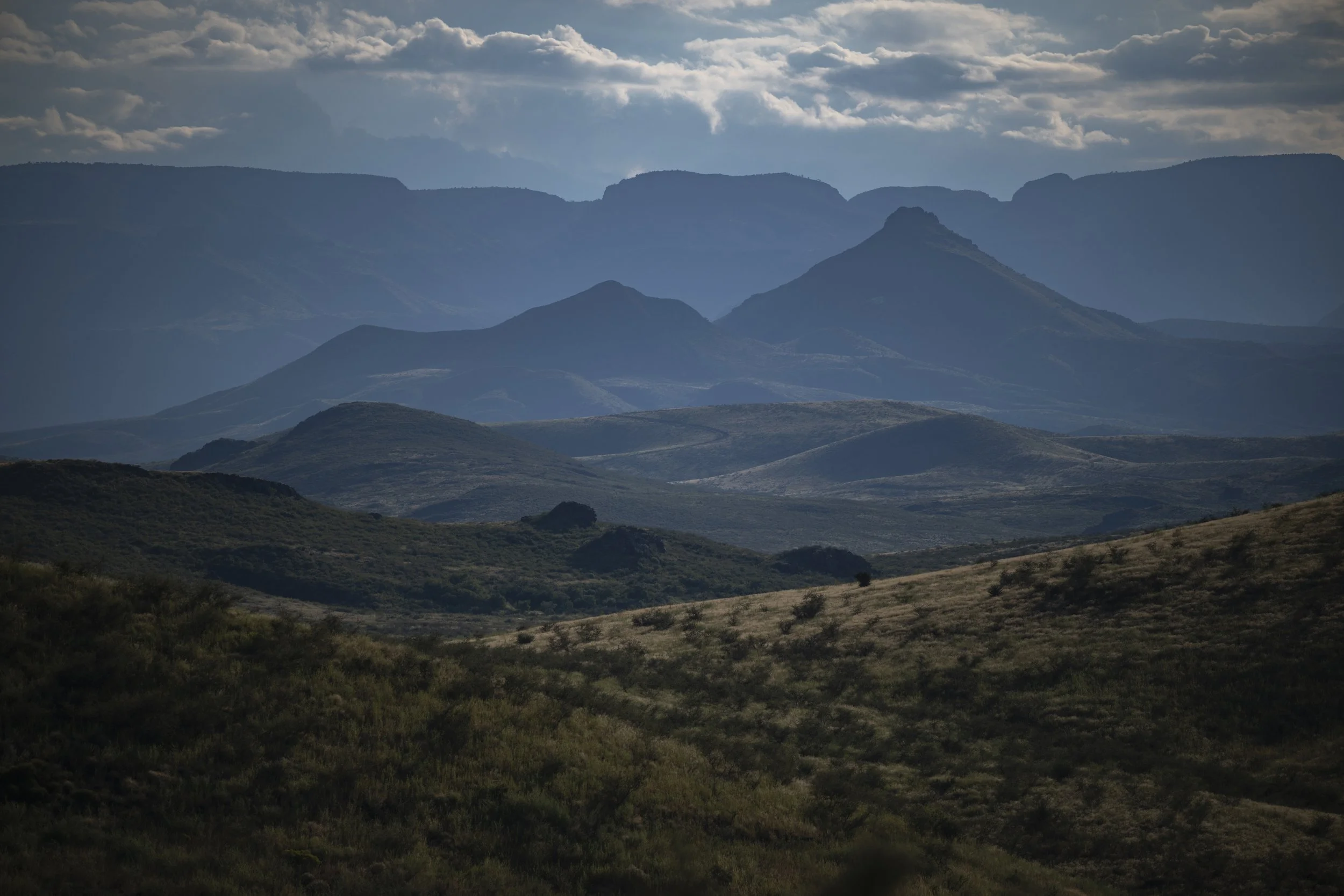
Where light and shadow dissolve into blue. Contours loosen and distance thins, until form gives way. Mountains recede into atmosphere until they blur into tone and haze.
This chapter marks a return from dissolution to embodiment—from the abstraction of perception to the quiet endurance of daily life. Here, stillness is not absence but tension held in place. The figures we encounter do not act; they linger, suspended in thresholds between communication and silence, safety and exposure, rest and displacement. Time stretches thin, and the ordinary becomes charged with unease. Each image probes how waiting—alone, unseen, or half-seen—can reveal the fragile architecture of human persistence.
A woman sits in solitude, framed by distance and reflection. Her gaze drifts toward a darkened phone that mirrors her own eyes back to her. The table extends like a gulf between presence and connection, technology and touch. This image opens the chapter in quiet suspension—the stillness of anticipation where no signal comes through, and the self-loops inward.
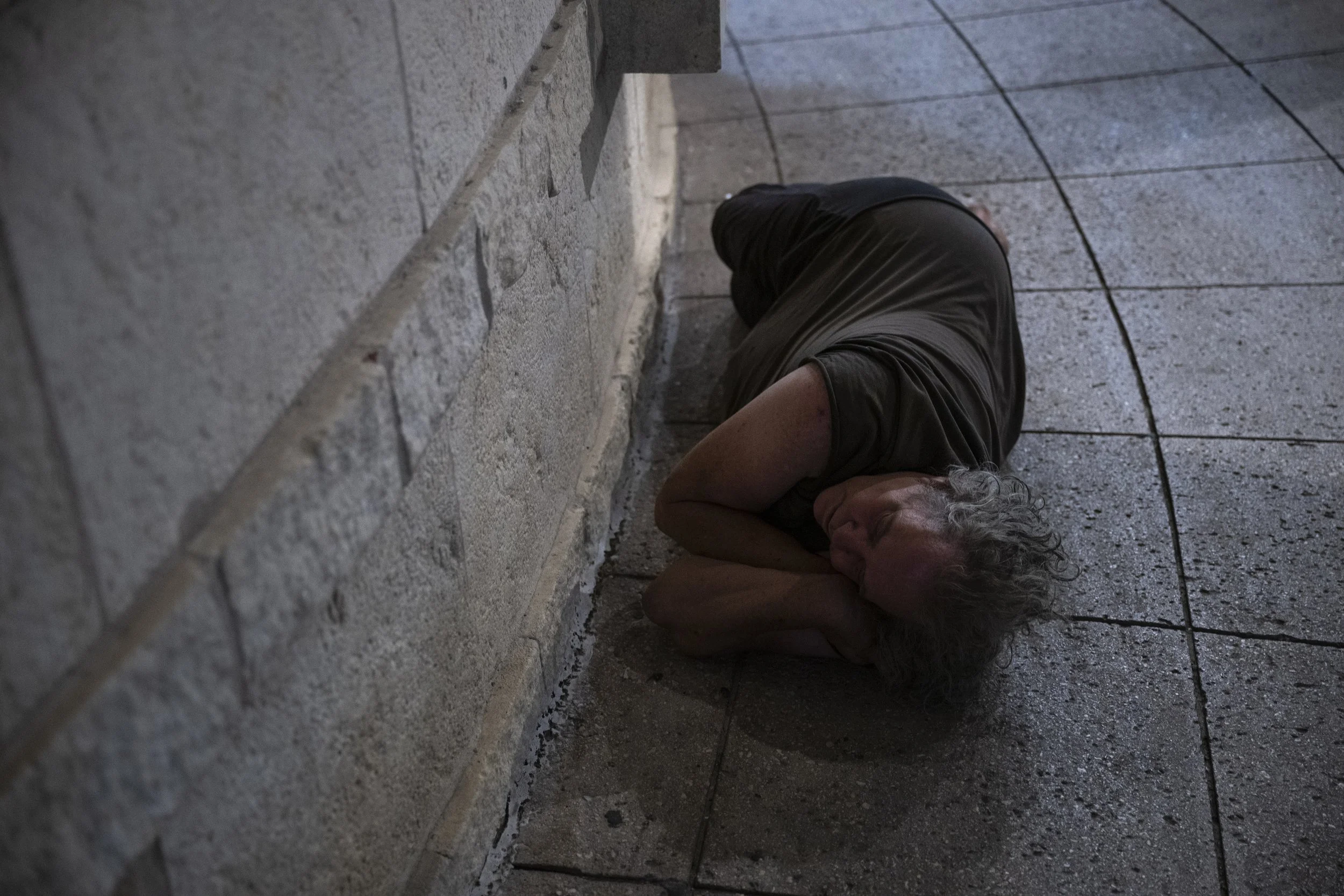
Curled against the curvature of stone, a body lies folded into the geometry of the street. The world here is cold and unyielding, yet it becomes a kind of shelter. In this image, stillness hardens into endurance—a posture of rest that resists disappearance, a fragile claim to being held by the world that has forgotten it.
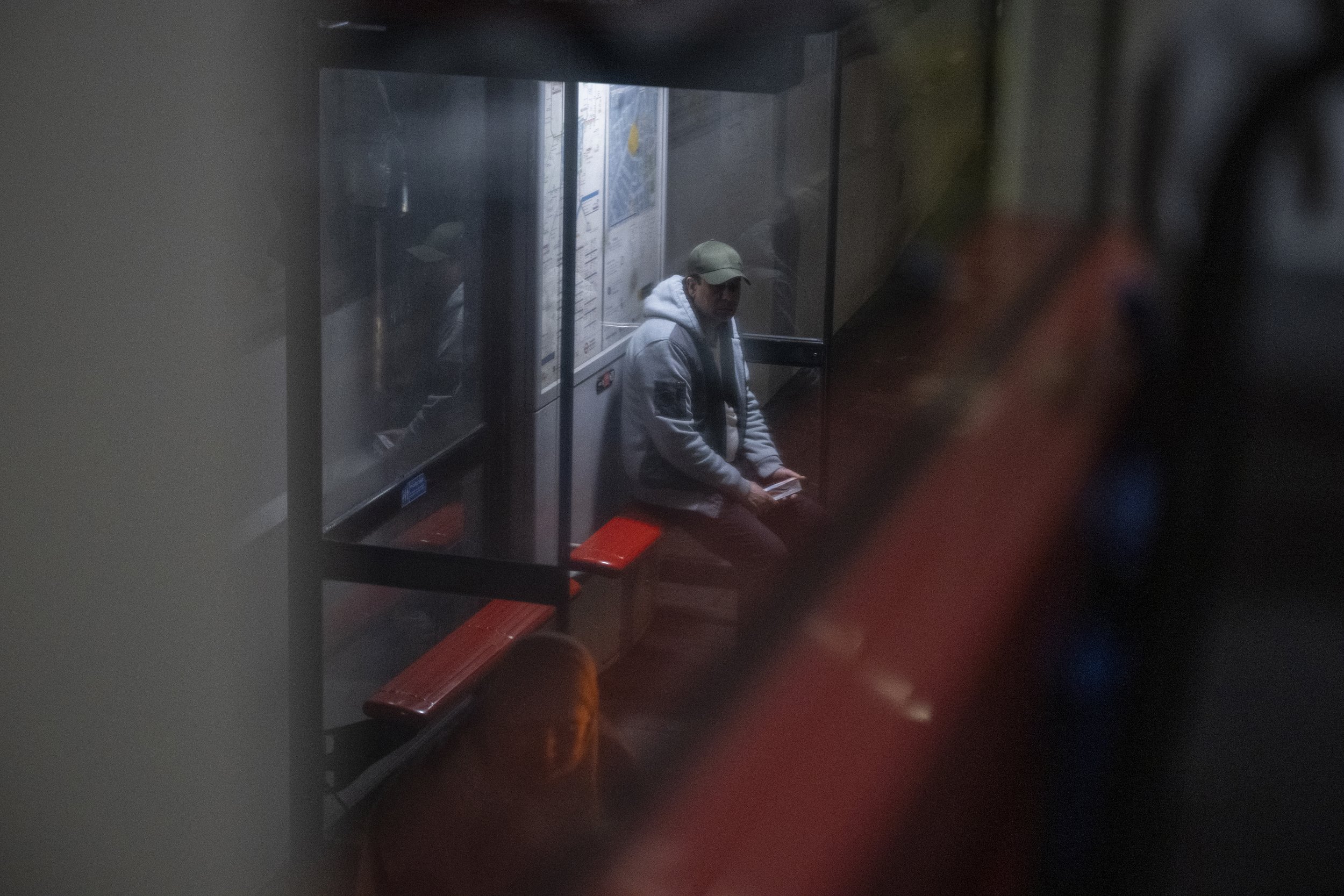
At a bus stop lit by the dim glow of artificial light, a lone figure waits, encased in glass and reflection. The image captures a state between transit and inertia—motion deferred, belonging postponed. The world outside blurs, refracted by condensation and passing lights, as the figure remains both visible and unseen.
This chapter turns inward to domestic thresholds—hallways, doorways, panes of glass. Built for passage, they hold us still. However, AS light spills in, it draws us to the outside world. Each image in this chapter registers ass a quiet negotiation between enclosure and exposure.
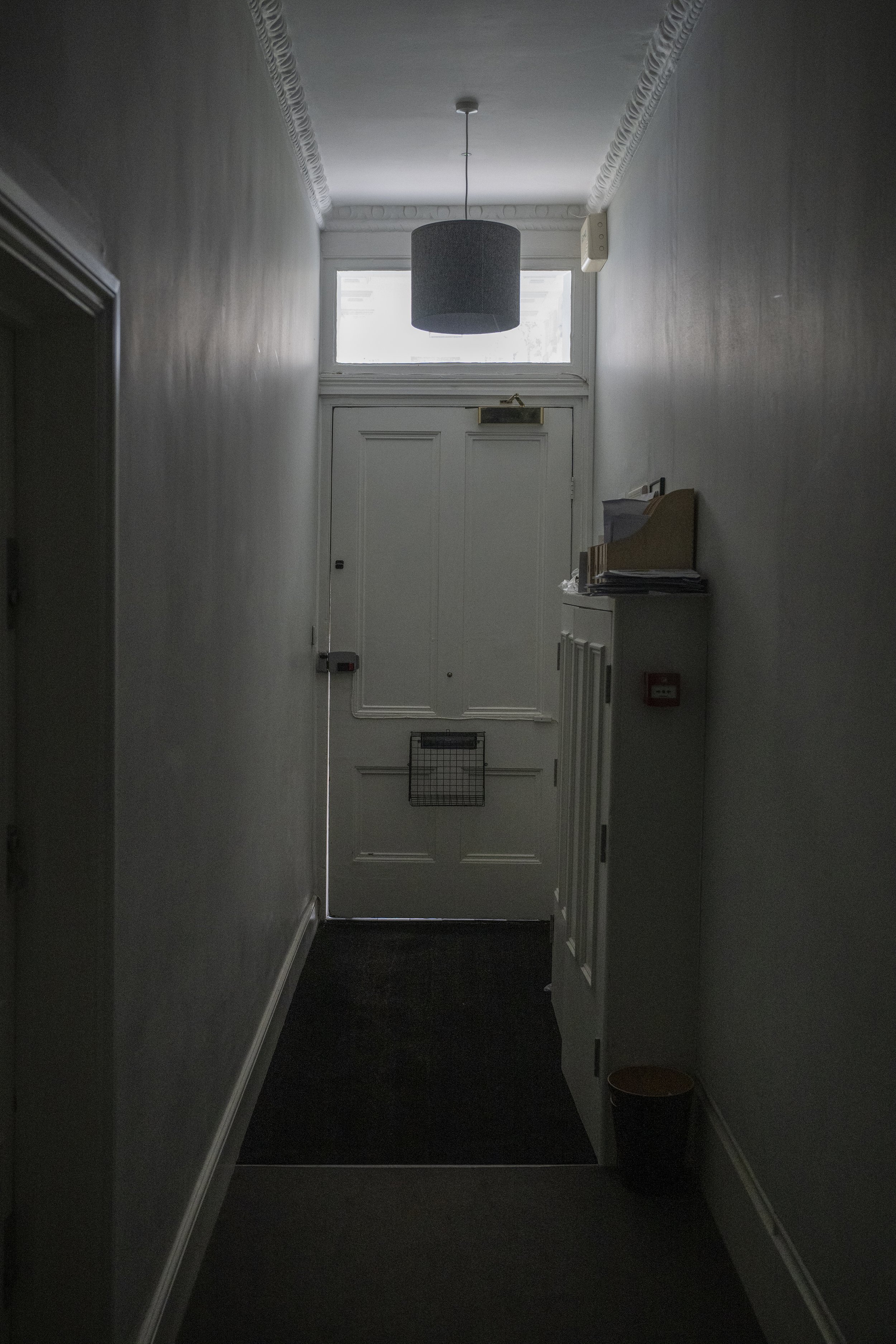
A study of the moment before crossing. The closed door and narrow corridor hold anticipation and interior stillness. We stand in a space made to lead elsewhere, yet the absence of a figure or destination gives it weight.
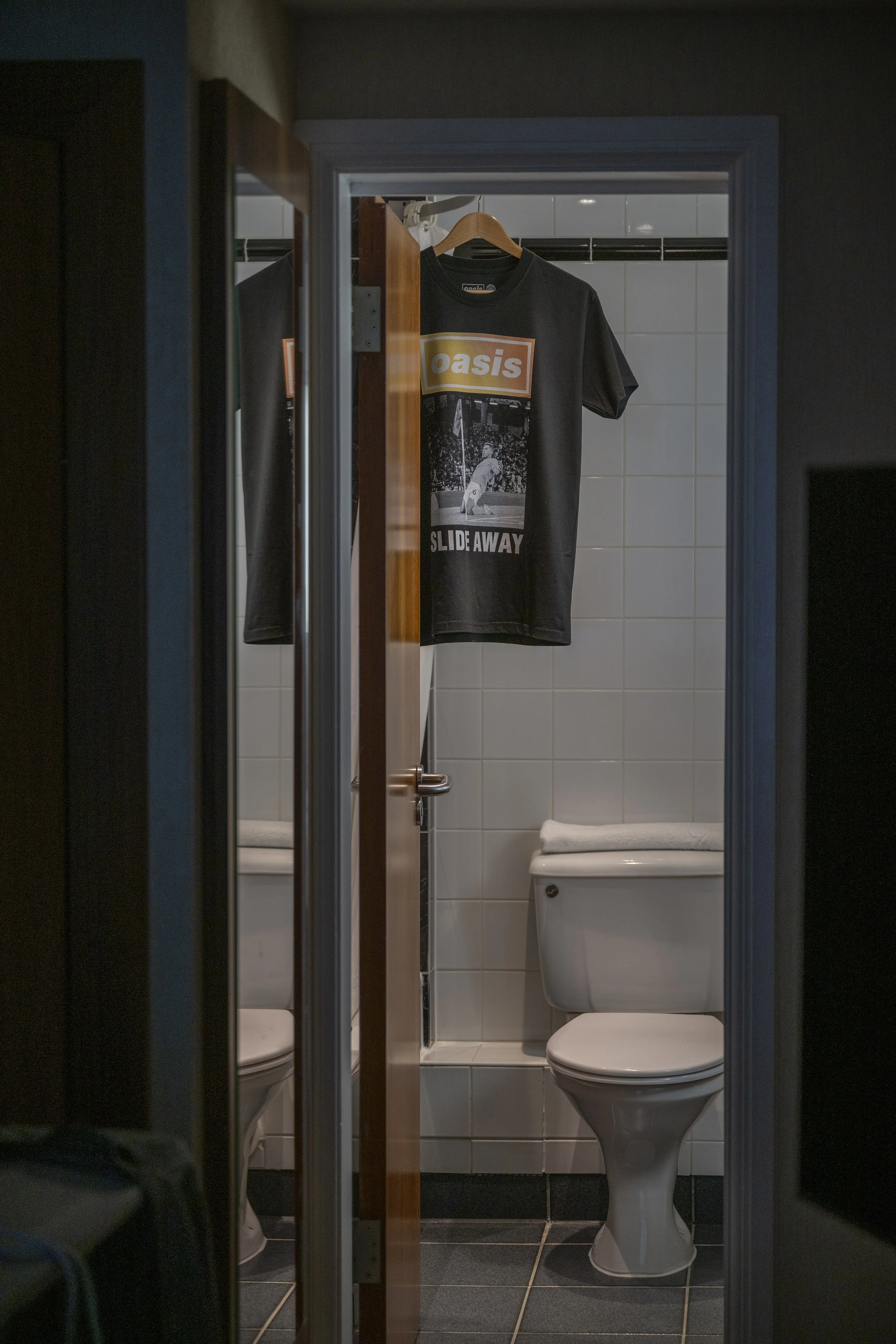
The turn inward deepens from architecture to interior mood. What remains is the afterimage of presence—signs that someone was here, now gone. The room keeps the residue and makes it felt.
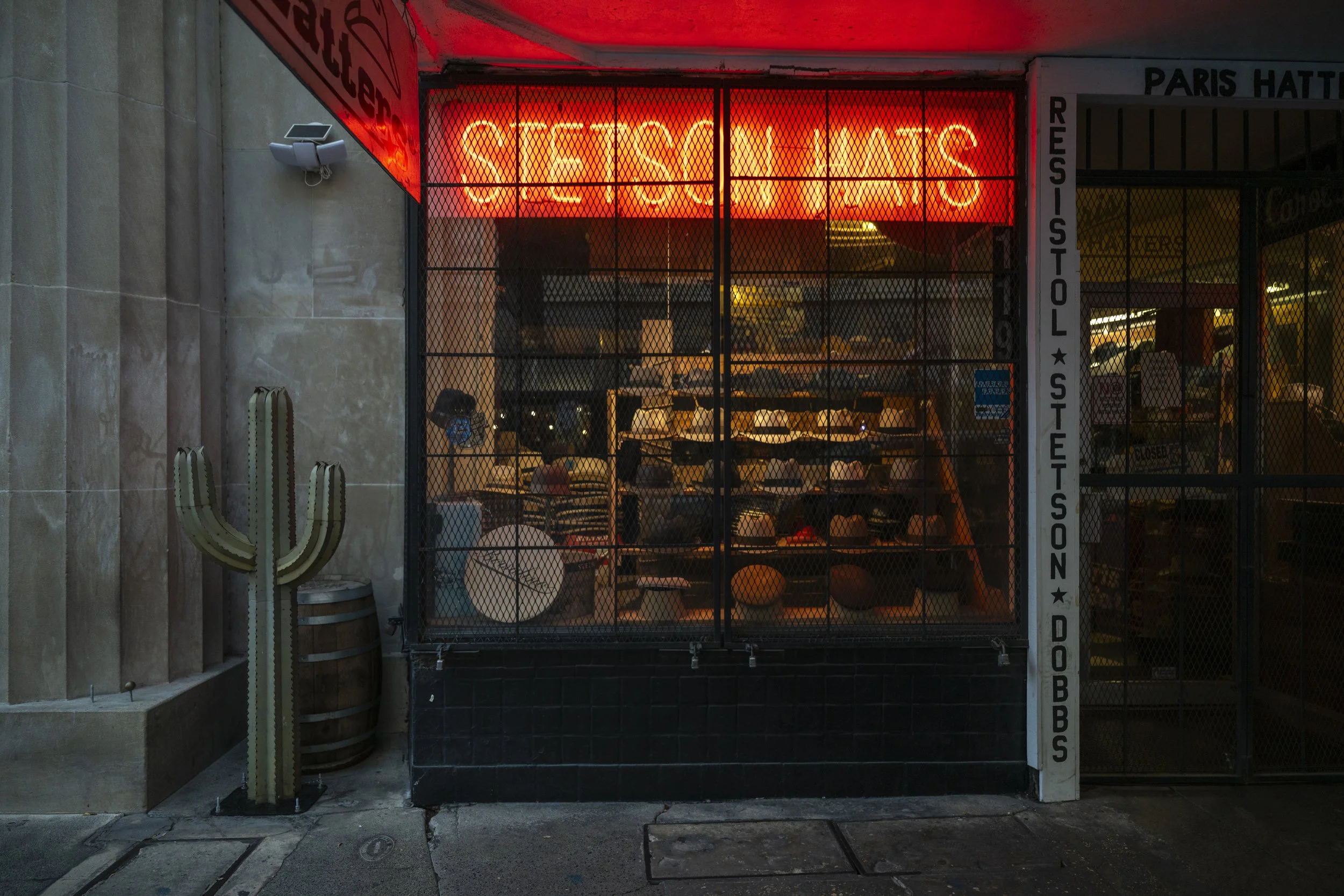
The private interior yields to a public façade. A storefront lit from within echoes the corridor’s light, now staged for display and commerce. The gaze shifts from personal space to social surface, a measured emergence toward the street.
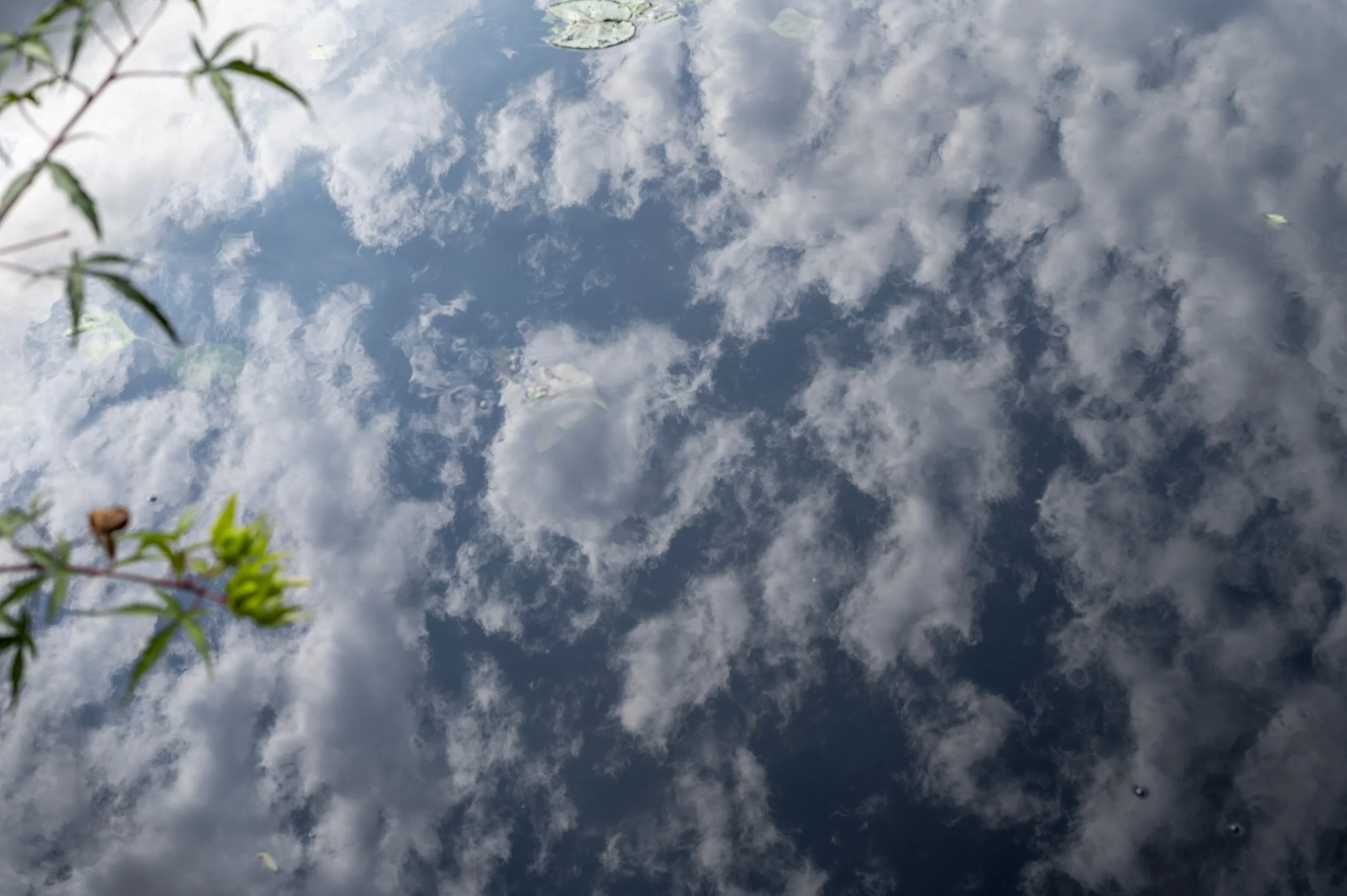
A moment when perception recognizes its own fallibility—when it becomes aware that seeing is an interpretation, not a fact. The reflection of clouds across still water reverses orientation and the world above drifts beneath. What was once sky becomes surface, and certainty dissolves in the act of looking.
Light scatters across the water’s skin, caught between leaf and reflection. The surface flickers with a quiet instability—neither depth nor appearance, but a negotiation between them. It recalls Monet’s Water Lilies, yet through a photographic sensibility—transient, literal, and unresolved. Stillness and motion coexist in the same frame, bound by the shifting logic of light.
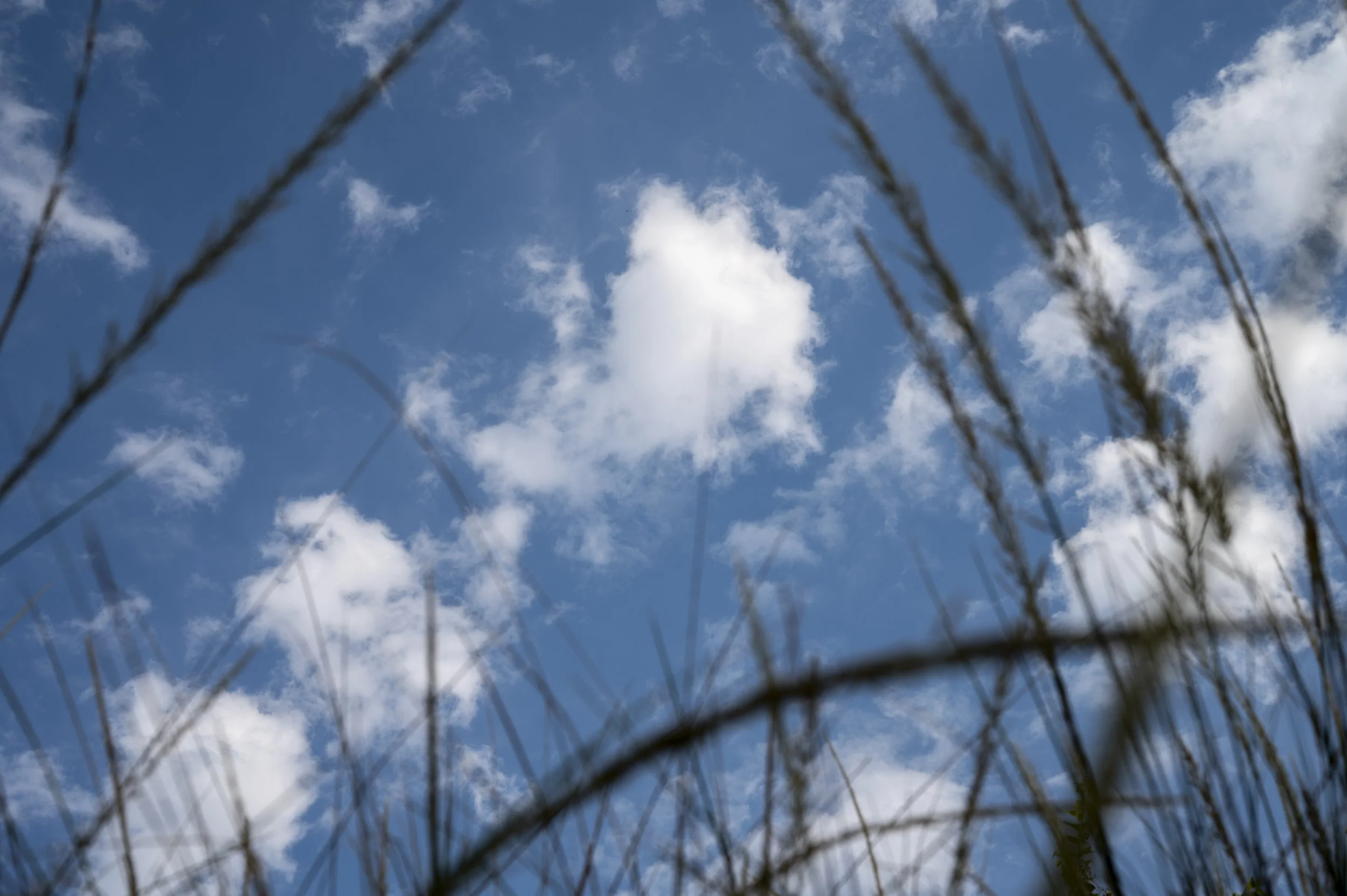
This chapter drifts from the tangible to the perceptual—from rooms defined by walls to spaces defined by light. What was once architectural becomes atmospheric. Surfaces dissolve and directions reverse. Here, the world is seen not as solid form but as reflection—fragile, temporary, and inverted.